

The gas water heater replacement cost is typically around $1,000–$2,700 for a standard tank-style replacement in an existing gas setup, with homeowners paying more when labor, materials, venting, permits, relocation, or higher-efficiency equipment are required. Actual pricing changes with location, unit size, fuel configuration, and installation complexity.
- Gas Water Heater Replacement Cost
- Gas Water Heater Replacement Cost 40 Gallon
- Labor Cost to Replace a Gas Water Heater
- Labor Cost to Install Water Heater
- Home Depot Water Heater Installation Cost
- Electric Gas Water Heater Replacement Cost
- Water Heater Replacement Cost by Type
- Tank-Style Water Heater
- Tankless Water Heater
- Cost to Install Gas Water Heater by Size
- Factors Affecting Gas Water Heater Replacement Cost
- Water Heater Type
- Size and Capacity
- Venting System
- Permits
- Location of Installation
- Additional Replacement Costs
- Gas Line Installation
- Expansion Tank
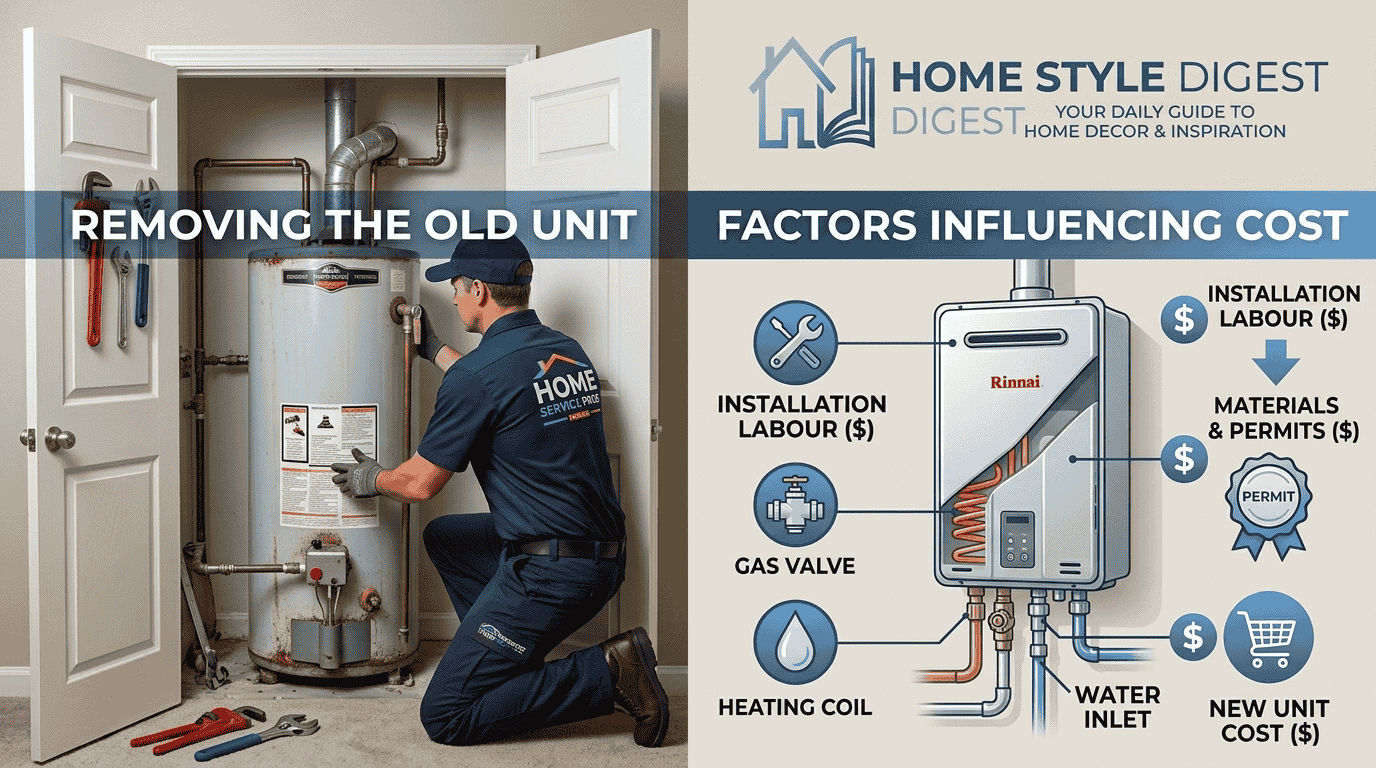
- Water Heater Removal
- Gas Water Heater Replacement Process
- Signs You Need to Replace Your Gas Water Heater
- DIY vs Professional Gas Water Heater Replacement
- Gas Water Heater Monthly Operating Cost
- Benefits of Replacing a Gas Water Heater
- FAQ’s
Gas Water Heater Replacement Cost
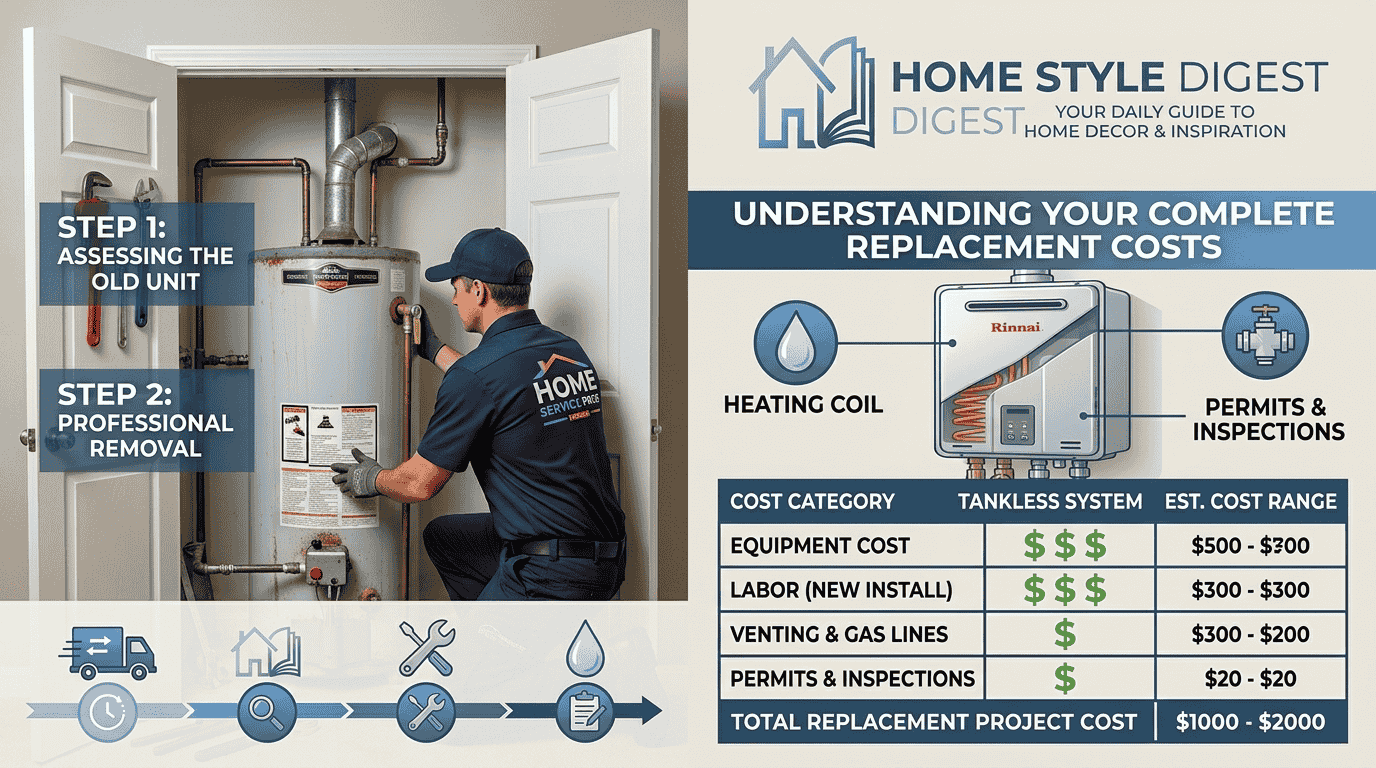
The national average provides a useful starting point, but it does not represent every household. A gas water heater may have a modest replacement cost when the old unit is simply removed and a comparable model is installed using the existing gas setup. Current market data places many standard replacement projects around $1,000–$2,700, while Home Depot’s current guide places standard tank installation at $1,600–$2,400.
For a conventional tank-style unit, the average cost combines the appliance, installation, and necessary job materials. The upfront cost can look higher than expected because utilities and long-term operating performance are also relevant. Labor and materials vary according to fuel type, location, local labor rates, existing plumbing work, required electrical work, and whether the installation must accommodate a new water heater in a different position.
In practical estimates, a like-for-like replacement is generally easier to price than a unit that must be relocated. Installation costs also change with water heater type, size, and capacity. Higher-efficiency equipment can increase the purchase price while offering potential energy savings over time. Comparing those savings with future repair costs and maintenance costs gives a more realistic ownership picture.
Modern choices include high-efficiency models, traditional tank water heaters, tankless water heaters, condensing gas water heaters, and hybrid systems. Regardless of the model selected, professional installation, applicable safety codes, and manufacturer guidelines should remain part of the budget rather than being treated as optional extras.
Gas Water Heater Replacement Cost 40 Gallon
A 40 gallon gas water heater is often selected because its replacement cost balances tank size, household size, and available capacity. A standard tank serving one to four people can provide useful hot water capacity without moving into an unnecessarily large appliance.
The materials, installation cost, and unit price depend on the model and the home’s gas system. A straightforward replacement using the existing setup generally avoids major structural changes, although labor cost still depends on access and installation requirements. The storage capacity is measured in gallons, while efficiency affects how economically that stored water is heated.
For buyers comparing models, energy efficiency deserves attention alongside purchase price. A cheaper replacement can become less attractive if it uses substantially more energy throughout its service life.
Labor Cost to Replace a Gas Water Heater
The labor cost to replace a gas water heater is influenced less by the appliance’s sticker price than by the conditions surrounding the job. Labor costs for a tank-style gas water heater replacement commonly form a meaningful part of the total cost, particularly when the work requires additional connections or code upgrades.
Average labor for a simple tank-style replacement is normally lower than tankless installation, because changing to a tankless configuration can involve different venting, gas supply, and plumbing requirements. A plumber may charge using hourly rates or quote the entire installation according to project cost and complexity.
Older installations can require attention to gas connections, plumbing, ventilation, or electrical components. Professional installation is especially important where safety and code compliance are involved. Correct installation can also preserve warranty protection, which makes the cheapest labor quote less attractive if it does not meet manufacturer requirements.
Labor Cost to Install Water Heater
The labor cost to install water heater equipment depends on whether the job is a simple installation, a tank water heater replacement, a tankless replacement, or a tank-to-tankless conversion. Each situation changes the labor costs because the plumber must work with a different level of infrastructure.
A straightforward gas water heater replacement may require less installation work than converting an electric water heater system. A plumber evaluating the job considers the hourly rate, accessibility, existing connections, and the overall total project cost.
Greater complexity usually appears when plumbing modifications, electrical work, a gas line, or a new ventilation system is required. The difference between a like-for-like replacement and a redesigned installation can therefore be substantial even when the replacement appliance itself has a similar price.
Home Depot Water Heater Installation Cost
The water heater installation cost through a major retailer can include more than the appliance itself. Home Depot currently describes its installation service as covering the broader water heater replacement process, with the final quotation depending on site conditions.
The quote may account for labor, the unit, materials, and compatibility with the home’s plumbing system. Available equipment includes gas water heater, electric water heater, tankless water heater, and conventional water heater options. The retailer says its installation process includes delivery, disconnection of the old unit, installation, testing, and haul-away, although additional charges can apply when code upgrades or complexity are involved.
The professional installer may also coordinate permits, disposal, the old water heater, and necessary connections involving gas lines and water lines. Current Home Depot information also notes that its authorized providers obtain required permits and offer labor warranty protection in applicable installations.
Electric Gas Water Heater Replacement Cost
The electric gas water heater replacement cost comparison becomes useful when a homeowner is deciding whether to stay with the current fuel source. An electric water heater and gas water heater can have very different replacement cost, installation cost, and long-term operating costs.
The selected fuel type affects energy efficiency, utility costs, and required installation infrastructure. A traditional tank water heater may be less disruptive when replacing an identical unit, while a tankless system can involve additional work around the gas connection or electrical components.
For an existing gas household, labor and materials may remain relatively controlled when the same configuration is retained. Switching fuel sources can change household energy consumption patterns and the home’s hot water supply. The final decision should therefore consider performance, maintenance, and likely repair costs, rather than simply comparing the appliance prices.
Water Heater Replacement Cost by Type
The water heater replacement cost changes significantly by type. A tank-style water heater remains the familiar conventional option, using a large tank that stores water and constantly heats it to maintain the available hot water supply.
A tankless water heater, by contrast, heats water on demand and can provide continuous hot water when properly sized. Its higher upfront installation cost can be offset over time through potential energy savings, although maintenance costs can differ from those associated with traditional tank systems.
The right choice is therefore not automatically the lowest-priced unit. A household with predictable demand may favor a tank, while another household may value on-demand production and reduced standby heating. Current Home Depot estimates illustrate the difference: standard tank installation is generally $1,600–$2,400, compared with $2,400–$5,400 for tankless installation.
Tank-Style Water Heater
A tank-style water heater is a conventional option built around a large tank or storage tank that keeps hot water ready for use. Its familiar heating system makes replacement relatively straightforward when the household retains the same configuration.
A gas water heater may use natural gas, while an electric water heater uses electricity. Some households also select a propane water heater where that fuel is available. Modern high-efficiency models can reduce energy use compared with older equipment, while solar models represent a different technology altogether.
The appropriate fuel type and capacity should match household needs, rather than being selected solely according to purchase price.
Tankless Water Heater
A tankless water heater is a demand system that heats water without conventional storage. Because there is no large reservoir continually holding heated water, it can deliver continuous hot water when demand and equipment sizing are properly matched.
The trade-off is often a higher upfront cost and potentially greater installation cost. The household should also budget for energy savings, recurring maintenance costs, and possible repair costs. A gas tankless installation can be particularly sensitive to existing infrastructure.
A properly sized system is essential. Its output is commonly discussed in gallons per minute, so the expected simultaneous demand matters more than simply counting people in the home.
Cost to Install Gas Water Heater by Size
The gas water heater size influences the installation cost because a larger appliance can require different clearances, connections, and supporting materials. Tank size and capacity should reflect household size and expected demand rather than being chosen solely by available space.
For storage equipment, capacity is expressed in gallons, while tankless systems are commonly evaluated by gallons per minute or GPM. A higher hot water capacity may increase the purchase and replacement cost, particularly when moving to larger or more sophisticated equipment.
Unit price is only one part of the calculation. A correctly sized system can avoid paying for unnecessary capacity while still providing dependable hot water.
Factors Affecting Gas Water Heater Replacement Cost
Several factors can change the gas water heater replacement cost, including water heater type, size, capacity, and brand. The venting system can also make a major difference, especially when the replacement changes combustion or exhaust requirements.
Permits, installation location, labor rates, and local costs vary between communities. Existing plumbing modifications, electrical work, or a new gas connection can push the quote higher. Relocation adds another layer because the installer may need to extend utilities or modify the vent route.
These additional costs are why a national estimate should be treated as a planning figure rather than a guaranteed local price.
Water Heater Type
The selected water heater type has a direct effect on the budget. Traditional tank water heaters generally have a familiar installation arrangement, whereas tankless water heaters can require different connections and sizing.
Condensing gas water heaters and other high-efficiency models may carry a greater upfront cost, but the comparison should also include future energy expenses. Hybrid systems represent another technology and may have different equipment and installation requirements.
The practical question is not which technology is universally cheapest. It is which option produces acceptable operating performance without creating unnecessary replacement costs or complicated installation requirements.
Size and Capacity
Size and capacity should be evaluated together. A storage tank size determines how much water is available before recovery becomes important, while GPM, or gallons per minute, is particularly relevant to demand-based equipment.
Larger tanks provide higher capacity, but they can require more materials, floor space, and supporting installation work. The expected hot water supply should therefore be matched to actual household demand.
Choosing equipment that is substantially larger than necessary can increase the installation costs and replacement cost without delivering proportional value.
Venting System
The venting system is one of the less visible components of a gas water heater installation. Proper ventilation is necessary to control combustion exhaust and prevent dangerous carbon monoxide buildup.
Some installations use direct vent systems, while others rely on passive ventilation or power vent systems. Power-assisted designs use fans or blowers, which introduces electricity requirements that can create additional costs.
If a replacement changes the vent configuration, electrical work may be needed. This is one reason a seemingly simple appliance swap can become a more involved installation once the entire combustion and exhaust arrangement is examined.
Permits
Local permits may be required for installation permits, especially where gas appliance installation involves modifications. Projects involving plumbing modifications can also trigger requirements beyond a simple appliance exchange.
A homeowner should ask whether water heater replacement permits and gas connection permits are included in the quoted price. Requirements depend on local regulations and applicable safety requirements.
Ignoring permitting requirements can create complications during inspections, resale, insurance claims, or future service work. A professional quote should clearly state which permits are included.
Location of Installation
The location of installation can quietly determine whether a replacement remains straightforward. A heater placed in a difficult access area may require additional handling, while relocation can involve new plumbing work, extended gas lines, or electrical work.
Greater installation complexity generally increases labor costs and other additional costs. A water heater relocation may also require changes to venting, drainage, clearances, or the surrounding enclosure.
From an installer’s perspective, keeping the new appliance near the existing utility connections is often the most economical approach. Home Depot likewise notes that locating tankless equipment near existing water and fuel sources can reduce extra labor and facilitate ventilation.
Additional Replacement Costs
Additional replacement costs commonly appear when the existing installation needs upgrades. Gas line installation, an expansion tank, water heater removal, and disposal can all appear as separate line items depending on the contractor and project.
Older homes may also require drywall repair or water damage repair if the previous appliance leaked. Other jobs involve plumbing changes because the replacement has different connection positions or dimensions.
The installer must evaluate the specific installation requirements, including labor and materials, before providing a final figure. Home Depot similarly notes that site inspection can identify additional charges required to meet local code.
Gas Line Installation
Gas line installation becomes a major cost consideration when the existing supply cannot support the replacement. A new gas line may be necessary during an electric to gas conversion or when the appliance is moved during relocation.
The condition of the gas system also matters. Damaged gas lines should not simply be reused, and a fuel conversion may require coordinated plumbing and appliance changes.
These conditions increase installation costs and labor compared with a direct replacement. Current Home Depot guidance specifically notes that changing fuel sources can increase installation charges.
Expansion Tank
An expansion tank is a safety component associated with certain plumbing configurations. As heated water expansion occurs, pressure can rise within the system, making an appropriately sized expansion solution important where required.
The water pressure characteristics of the home and the design of the plumbing system determine whether one is needed. Its installation cost should therefore be considered before the project begins rather than discovered after installation.
When an existing expansion tank is worn or unsuitable, replacement can become another line item in the water-heater project.
Water Heater Removal
Water heater removal begins with safely preparing the old water heater for replacement. Depending on the installation, the process includes disconnecting utilities, draining the appliance, moving it out of the work area, and arranging disposal.
The labor cost depends on accessibility and the condition of the old unit. A professional contractor normally incorporates removal into the broader replacement process, while installation preparation includes making the space ready for the incoming appliance.
Home Depot’s current service description includes disconnection and haul-away as part of its replacement process, subject to applicable service terms.
Gas Water Heater Replacement Process
The gas water heater replacement process starts by preparing the work area and safely shutting down the existing appliance. The installer will drain tank, disconnect gas lines, disconnect water lines, and remove old water heater.
The next stage is to install new unit, connect gas supply, and connect water supply. The technician then check leaks and test operation to verify that the appliance works correctly.
Because combustion equipment is involved, professional installation should follow applicable safety codes. The exact sequence can vary by appliance and site, but the objective remains the same: establish secure connections, proper venting, safe combustion, and reliable operation.
Signs You Need to Replace Your Gas Water Heater
Several signs suggest it may be time to replace gas water heater equipment. Unit age is one useful indicator, with many conventional units reaching roughly eight to twelve years, although service life varies according to equipment quality, water conditions, installation, and maintenance.
Inconsistent water temperature, discolored water, visible leaks, strange noises, rising energy bills, and insufficient hot water can all justify an inspection. These symptoms do not automatically mean replacement is required, because some can result from serviceable components or neglected maintenance.
Both tank-style water heaters and tankless units need appropriate maintenance. The important distinction is whether continued repairs remain financially sensible compared with replacing an aging appliance.
DIY vs Professional Gas Water Heater Replacement
A DIY approach may appear attractive when the replacement looks identical to the old appliance, but professional replacement is generally the safer choice for gas equipment. The work can involve gas connections, plumbing, ventilation, and electrical components.
Improper installation can create gas leaks, combustion problems, carbon monoxide exposure, or water damage. A qualified installer can also verify safety, code compliance, and required testing.
There is another financial consideration: warranty protection may depend on compliant installation. The apparent savings from doing the job personally should therefore be compared with the cost of correcting an unsafe or noncompliant installation later.
Gas Water Heater Monthly Operating Cost
The gas water heater monthly operating cost depends on natural gas prices, household demand, equipment efficiency, incoming water temperature, and usage patterns. Compared with electric models, the appliance’s fuel consumption can produce a different monthly profile.
Actual operating costs are part of broader utility costs and household utility costs, so the water heater should be evaluated alongside the home’s other energy-consuming systems. Frequent showers, large households, and high hot-water demand increase water heating requirements.
The most useful comparison is not simply the monthly bill. Energy consumption should be considered alongside equipment age, efficiency, maintenance, and expected service life to estimate realistic monthly expenses.
Benefits of Replacing a Gas Water Heater
The main benefits of replacing gas water heater equipment appear when an aging unit is becoming unreliable. A new appliance can provide a more reliable hot water supply, improved energy efficiency, and potentially lower repair costs.
Better equipment can also improve performance and reduce the risk associated with recurring leaks or unexpected failures. Regular maintenance remains important even after replacement, but starting with a properly sized and correctly installed appliance can make ongoing ownership more predictable.
The decision should ultimately compare the condition of the existing heater, its repair history, operating expenses, and expected remaining service life against the price of replacement.
FAQ’s
What Is The Average Labor Cost To Install A 50 Gallon Gas Water Heater?
The average labor cost to install a 50 gallon gas water heater is often misunderstood, because each home has different requirements and conditions affecting the final bill during a replacement project. Experienced technicians evaluate the work before giving estimates.
A standard gas tank water heater replacement typically ranges between $200 and $1,000, with most homeowners paying around $300 to $800 for normal services. The price changes when access, materials, or unexpected adjustments influence completion.
A straightforward swap-out allows plumbers to charge between $45 and $200 per hour depending on expertise. Many professionals note that replacement complexity affects pricing more than equipment alone, especially when old units require additional work.
The standard installation process takes roughly 2 to 5 hours to complete after preparation. Skilled installers review ventilation, connections, and safety checks first, creating a balanced approach that avoids hidden costs during replacement decisions today.
How Many Years Should A Gas Water Heater Last?
A standard gas tank water heater typically lasts around 8 to 12 years when maintained properly and checked during routine service visits by technicians who consider efficiency safety and future replacement needs before major failures.
Experts often review manufacturer guidelines alongside usage patterns because climate water quality and installation choices affect how long the unit performs while owners evaluate repair options and replacement considerations before investing in a new system.
A gas tank water heater may reach 8 to 12 years but real performance depends on maintenance habits energy demand and installation quality rather than age alone so careful assessment helps determine the right time.
Homeowners should understand that replacement decisions require more than age alone because corrosion leaks unusual sounds and reduced heating output can signal problems earlier than expected making professional inspection valuable for accurate long-term planning today.
Does a gas water heater last longer than an electric?
gas water heater replacement cost depends on factors including installation choices equipment condition and labor needs before homeowners decide upgrades or repairs. Experts compare gas water heaters with electric water heaters through longer lifespan maintenance.
electric units are generally viewed as having a longer lifespan of 10 to 15 years with proper maintenance because of simpler design and fewer combustion-related parts reducing thermal stress on the tank during regular use.
gas burner operation creates constant cycling that affects bottom of the tank and other components like the gas valve. Yet models recover supply faster with heat water ability while recovery rate remains a key performance factor today.
gas units require checking burners flame sensors and venting systems electric models mechanically simpler less frequent attention. Efficiency varies as convert energy to heat utility rates for gas versus electricity influence monthly operating costs larger households.
