

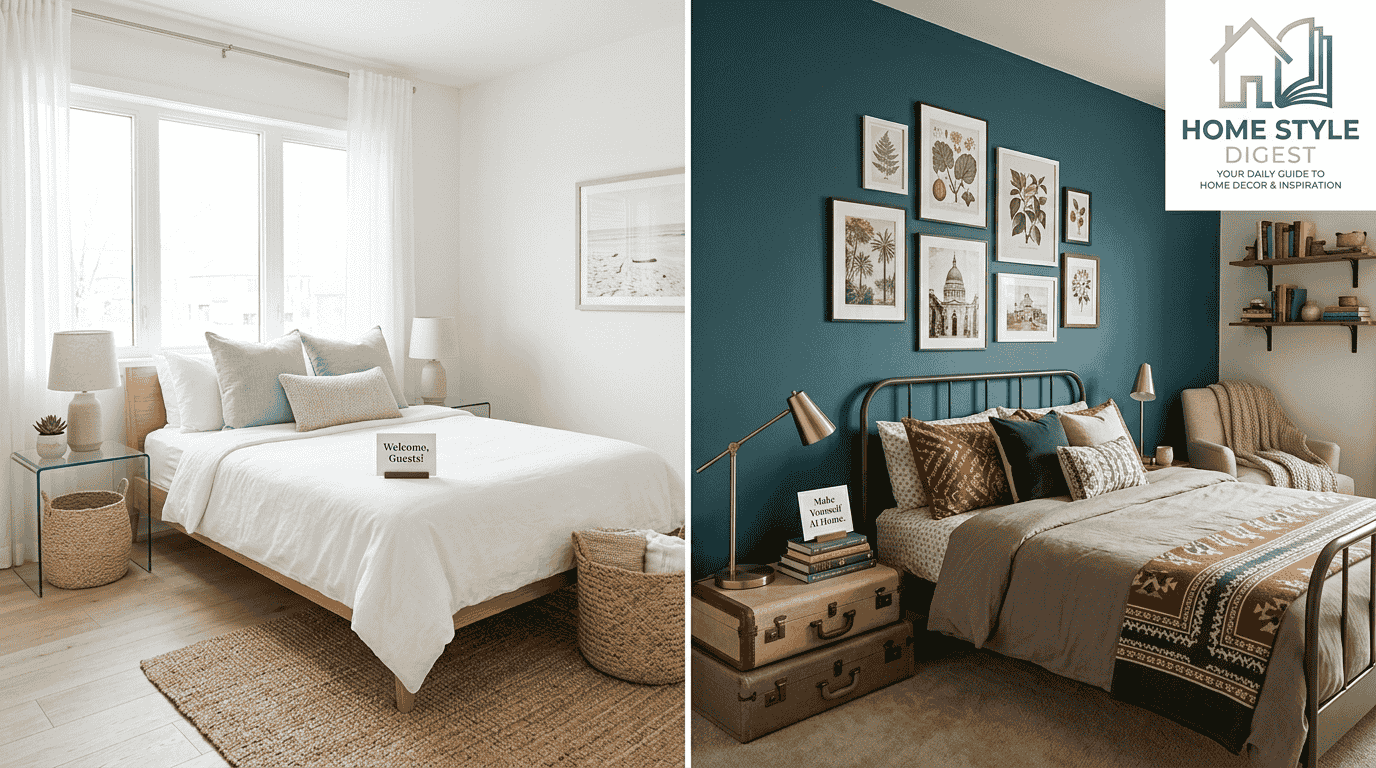
The best guest bedroom ideas treat a spare bedroom not as a decorating leftover but as a hospitality-focused retreat: a comfortable place where guests can feel at home. Thoughtful colors, textures, window treatments, reading light, and pillow choices turn a functional room into a comfortable retreat with genuinely hotel-like details.
- How to Create a Stylish and Comfortable Guest Bedroom
- 1. Choose a Theme and Create an Immersive Design
- 2. Use Wallpaper or Murals
- 3. Display Art and Statement Pieces
- 4. Layer Bedding, Pillows, Throws, and Soft Textiles
- 5. Add Rugs or Soft Flooring
- 6. Create a Workspace or Home Office
- 7. Make the Guest Room Multipurpose
- 8. Provide Storage and Closet Space
- 9. Create a Reading or Sitting Area
- 10. Improve Guest-Room Lighting
- 11. Add Curtains, Blackout Treatments, and Privacy
- 12. Add Mirrors and a Dressing Area
- 13. Add Flowers, Plants, and Greenery
- 14. Choose a Relaxing or Deliberate Color Palette
- 15. Design Intentionally for Small Spaces
- 16. Use Twin Beds, Multiple Beds, or Bunks
- 17. Make the Bed or Headboard a Feature
- 18. Provide Toiletries and Guest Essentials
- 19. Provide Wi-Fi and Other Practical Conveniences
- 20. Add Food, Drinks, Snacks, or a Kitchenette
- 21. Add a TV
- 22. Keep the Room Clean, Simple, and Uncluttered
- 23. Add Personal, Thoughtful Touches
- 24. Incorporate Natural Materials and Nature-Inspired Design
- 25. Mix Old, New, and Unexpected Furniture
- 26. Convert the Attic
- 27. Repurpose the Garage
- 28. Use the Basement
- 29. No Guest Room, No Problem
How to Create a Stylish and Comfortable Guest Bedroom
A successful guest-room design can begin in a standard guest bedroom, a converted area, or even an overlooked corner of the home. Rather than treating these spaces as decorating afterthoughts, experienced designers often use experimental rooms and multifunctional layouts to test bolder design choices, especially in a small guest bedroom.
A well-decorated guest bedroom should feel visually interesting, cohesive, and practical without becoming impersonal. The strongest rooms balance decorating, hospitality, statement pieces, and a personal point of view, creating distinctive rooms that welcome overnight visitors with a subtly luxurious atmosphere. Even when the space is simply called a guest room, its purpose remains clear: comfort should shape every decision.
1. Choose a Theme and Create an Immersive Design
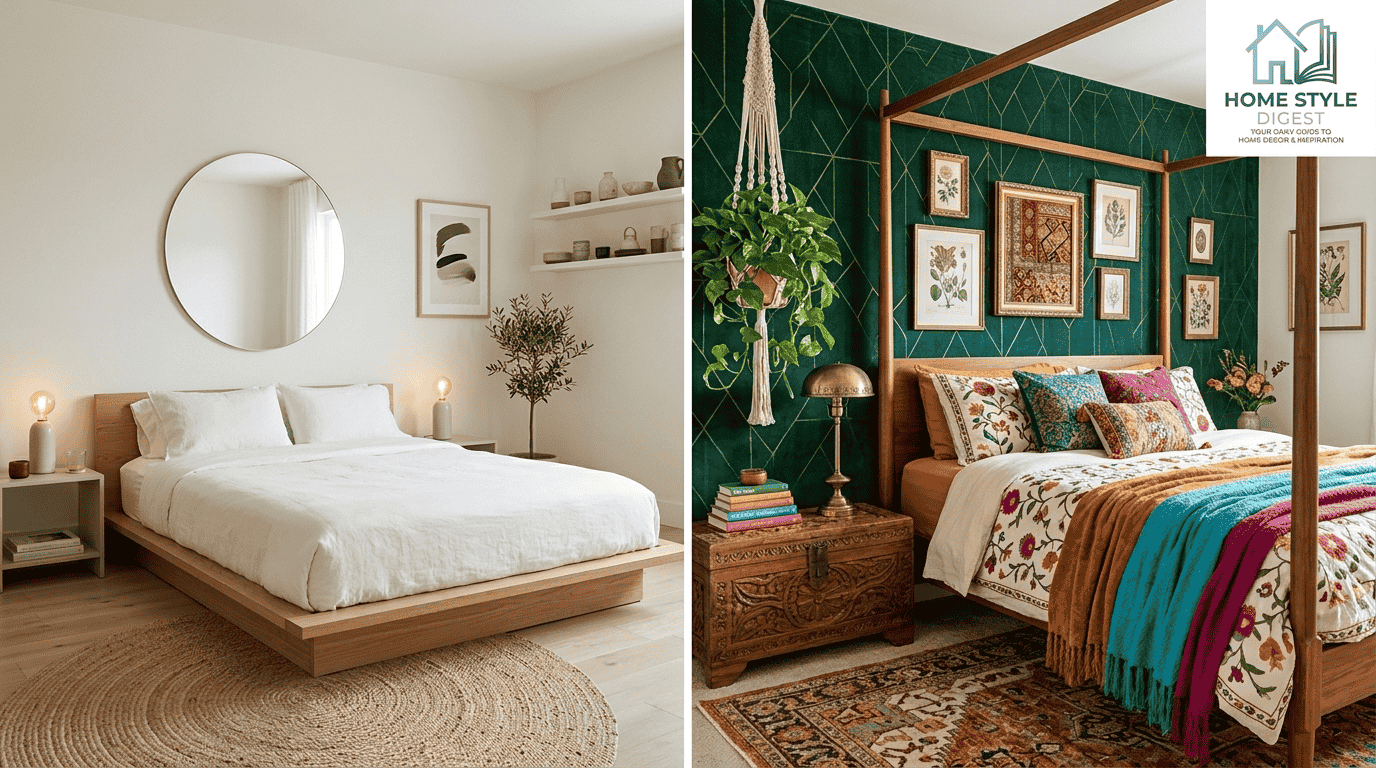
Some of the most memorable guest bedroom ideas begin with a defined visual concept rather than a shopping list. A guest room is a relatively low-risk place for color experimentation, so designers can establish a strong visual direction through colors, textiles, artwork, and thoughtfully selected furniture.
A clear design theme then guides smaller decor choices and accessories. A bolder pattern, expressive wallpaper, or concentrated statement decor can create immersive design without visual confusion when every element supports one visual concept and a genuinely cohesive design.
Make It Dramatic
A guest bedroom offers an unusual opportunity to attempt dramatic design without committing an entire house to it. Carefully controlled bold decor can produce a statement room that feels theatrical yet sophisticated; the goal is a visually ambitious design, not random excess.
2. Use Wallpaper or Murals
Contrary to the assumption that pattern belongs on one wall, wallpaper often works more convincingly when it establishes the overall design direction. Papering multiple surfaces, including ceilings, can produce a gentle cocooning effect, particularly in a compact bedroom where visual boundaries are already close.
For a guest bedroom, designers may cover multiple surfaces or use accent walls, depending on scale. Large murals, a dimensional wall treatment, and other decorative alternatives can turn the whole room into a composition with visual interest. Even a restrained ceiling treatment can become an unexpected focal point.
3. Display Art and Statement Pieces
A small space does not require timid art. In fact, statement pieces can give a guest room more personality because the eye immediately understands where the intended visual focus lies.
Large artwork, layered wall art, tapestries, or compact murals can become purposeful focal pieces. Meanwhile, unusual sculptural objects and smaller artistic elements reward closer attention. The strongest display usually revolves around one focal point, allowing personality to emerge without filling every surface.
4. Layer Bedding, Pillows, Throws, and Soft Textiles
Visual styling matters, but the body notices comfort first. Fresh clean bedding, supportive pillows, and smooth linens help guests relax and settle into the room almost immediately.
A designer can layer quilts, blankets, and throws across the bed, then introduce soft textiles through curtains or upholstery. Mixing varied textures gives the arrangement visual depth, while carefully chosen textiles keep the bed feeling cozy rather than overworked. The practical test is simple: a visitor should be able to sleep comfortably and adjust the layered bedding to personal comfort.
5. Add Rugs or Soft Flooring
A room can look finished and still feel cold underfoot. Rugs, soft flooring, and plush carpeting immediately make a guest bedroom feel physically warmer, especially during early mornings.
Beyond underfoot comfort, floor coverings add color, pattern, and visual character. Well-aged vintage rugs contribute character, while wall-to-wall carpeting creates a quieter, softer atmosphere. In both cases, the room gains warmth and a more intentional finished appearance.
6. Create a Workspace or Home Office
Modern guest bedroom ideas increasingly acknowledge that visitors travel with laptops and may need to work during longer visits. A small workspace can therefore be more useful than an oversized decorative chair.
A compact desk or streamlined desks can sometimes replace bulky bedside tables, particularly in a multifunctional room. With built-in storage or discreet integrated storage, an office setup can operate as a true home office when no guests are staying. The guest bedroom retains its hospitality role while gaining everyday function for the household.
7. Make the Guest Room Multipurpose
A room that waits unused for visitors is not automatically more hospitable. Often, the better choice is a multipurpose arrangement that functions as an office, sitting room, or game room during ordinary weeks.
Daybeds, Murphy beds, and sleeper sofas make space saving easier, while desks, storage furniture, and other multifunctional furniture support flexible use. When planned carefully, a guest room can remain an active everyday living space without sacrificing comfort for guests. Such multifunctional layouts turn one room into useful living space rather than a rarely entered display.
8. Provide Storage and Closet Space
Hospitality improves when visitors do not have to live from an open suitcase. A guest room should provide some closet space, usable drawers, or accessible shelving so a visitor can unpack comfortably.
If the closet stores household items, the host can create clear wardrobe space before arrival. Hooks, bedside storage, built-ins, and a compact unit for luggage all support better organization. Dedicated wardrobe space for clothing helps visitors keep their belongings organized, and makes the overall storage system feel intentional.
9. Create a Reading or Sitting Area
A guest does not always want to sit on the bed. Even one comfortable chair and a small table can establish a functional sitting area where visitors can pause, call home, or unwind.
For readers, a reading area or compact reading nook becomes more useful with adequate reading light. A small bookcase, wall-mounted bookshelves, or a few bedside books makes the guest room feel inhabited without adding clutter. Proper seating and a focused reading light encourage real relaxation, rather than merely filling an empty corner.
10. Improve Guest-Room Lighting
A single ceiling fixture rarely creates good guest-room lighting. Effective layered lighting combines ambient lighting, task lighting, and focused bedside lighting so the room changes easily from arrival to sleep.
Wall sconces, hanging pendants, and compact bedside lamps can preserve valuable surface space while giving visitors useful illumination for reading. Dimmable fixtures make relaxation easier, and thoughtful lighting layers support safe nighttime movement. During the nighttime hours, that flexibility often matters more than decorative brightness.
11. Add Curtains, Blackout Treatments, and Privacy
Sleep quality is partly an interior-design problem. Good window treatments give guests control over daylight, outside views, and privacy, all of which affect different sleeping schedules.
Full-height curtains or tailored drapery can soften a guest bedroom and even visually enlarge the room. Pairing them with shades or blackout treatments increases light control and helps control daylight for people who sleep late. That flexibility accommodates different sleeping schedules, promotes better sleep, and creates subtle visual enlargement.
12. Add Mirrors and a Dressing Area
In compact guest bedrooms, a mirror is more than decoration. Strategically positioned mirrors create light reflection, improving visual spaciousness by reflecting light around darker corners and making the room appear larger.
A small table, narrow desk, or slim vanity can form a useful dressing area and getting-ready station. This practical station gives guests somewhere for grooming, while the combined mirror and surface provide useful space enhancement. Even a modest guest room benefits when everyday preparation has a designated place.
13. Add Flowers, Plants, and Greenery
A freshly prepared room becomes noticeably warmer when something living is present. Flowers, clipped branches, plants, or easy-care houseplants give a guest room an immediate sense of freshness.
These botanical accents introduce color and natural elements without demanding a complete redesign. Carefully chosen greenery contributes a lived-in quality, while a simple arrangement creates a fresh atmosphere and signals to visitors that this is a genuinely prepared room. The effect is a quiet welcoming atmosphere, not staged perfection.
14. Choose a Relaxing or Deliberate Color Palette
Among sophisticated guest bedroom ideas, color is treated as behavioral design rather than decoration alone. A deliberate color palette can influence relaxation, perceived spaciousness, and the overall visual mood before a visitor notices the furniture.
A deliberate palette might combine soft neutrals with one accent color, or move toward monochrome for stronger visual unity. White can amplify light, while saturated blue, pink, dark palettes, and other moody shades create greater emotional depth and warmth.
The key is intentionality. Color should support a memorable design experience, not simply follow trends. When the selected color supports genuine relaxation, the room achieves both a memorable design and psychological coherence.
15. Design Intentionally for Small Spaces
Small spaces often become better guest rooms because every decision has to earn its place. Strong space optimization begins with the actual architecture, including alcoves, low ceilings, and other forms of awkward architecture.
Instead of fighting space constraints, a designer can treat each limitation as an asset. Appropriately scaled furniture and careful furniture scale prevent overcrowding, while vertical space compensates for limited floor space. The resulting compact layout can feel surprisingly roomy.
A guest bedroom does not need a conventional bedroom layout to work. A flexible layout combined with selective minimalism often produces a more convincing room.
16. Use Twin Beds, Multiple Beds, or Bunks
One large bed is not always the most flexible choice. Twin beds can accommodate friends, siblings, children, and even unrelated adult guests who would rather not share sleeping space.
Where ceiling height allows, bunk beds make better use of vertical space, increasing space efficiency while preserving floor space. Other multiple beds can be arranged according to anticipated sleeping arrangements. This creates greater sleeping flexibility for overnight guests and keeps the guest room flexible across different household situations.
17. Make the Bed or Headboard a Feature
Because the bed occupies so much visual territory, treating it as an afterthought rarely works. A bold headboard, unusual bedframe, or full statement bed can act as the room’s visual centerpiece and primary focal point.
Upholstered headboards bring softness, while sculptural frames, canopies, and a full canopy bed create stronger architectural presence. Such distinctive bed treatments make the guest bedroom memorable without requiring decoration on every wall. The best bed treatments become a natural centerpiece for the entire room.
Add a Footboard Bench
A footboard bench at the end of the bed provides practical bedroom seating while giving visitors a convenient landing place for bags. The bench can hold luggage, offer temporary seating, and visually finish the bed without demanding much extra floor area.
Make It Feel Grand
A secondary bedroom can still project a luxurious feel. Larger-scale furniture, deliberate styling choices, and restrained grand design can make a guest room feel elevated, creating a formal impression without becoming stiff.
18. Provide Toiletries and Guest Essentials
Small inconveniences are remembered more clearly than expensive decoration. A thoughtful host can stock a guest room with practical guest essentials, including fresh towels, spare linens, water, and essential toiletries.
A small basket containing personal-care items, common frequently forgotten necessities, and other basics can spare guests an awkward late-night request. Extra bedding, simple comfort items, and clearly arranged welcome amenities address immediate necessities while supporting everyday personal care.
Offer Ventilation
Temperature preference varies widely between guests, so good ventilation matters. A ceiling or portable fan, reliable airflow, and basic air circulation can improve sleeping comfort and overall comfort in a guest room.
Place Close to a Bathroom
When several possible rooms could become the guest room, bathroom proximity deserves more weight than many decorative considerations. Better bathroom accessibility gives visitors more privacy and improves overnight convenience, making basic nighttime convenience much easier.
19. Provide Wi-Fi and Other Practical Conveniences
Digital hospitality now matters almost as much as fresh sheets. A guest room should make Wi-Fi information easy to find, rather than expecting guests to repeatedly ask the host.
A small card can display the network password, relevant Wi-Fi credentials, and any other useful credentials. This simple form of practical information supports reliable connectivity and better visitor convenience. Charging access and similar everyday conveniences round out the room’s practical amenities and conveniences.
20. Add Food, Drinks, Snacks, or a Kitchenette
Late-night hunger can turn a beautifully decorated room into an inconvenient one. A small beverage station with water, drinks, and packaged snacks improves overnight convenience without requiring elaborate service.
For longer stays, a small fridge or compact kitchenette can provide greater guest independence. Keeping a little food and basic refreshments nearby allows guests to choose self-service during the night, improving convenience and independence. In a larger guest room, this kind of quiet hospitality can feel unusually considerate.
Serve Breakfast in Bed
Occasional breakfast in bed can turn ordinary hospitality into a memorable guest experience. It works especially well when a guest room is intended to create a hotel-like experience: simple, hospitality-driven service can add warmth and comfort without changing the room itself.
21. Add a TV
A TV is not essential for every guest room, but it can be useful when visitors stay for several days. It provides independent entertainment, allowing people to watch television or other media without joining the household’s main living area.
For a guest bedroom, this simple form of entertainment adds comfort and supports independent viewing. Those who want subtle hotel-style amenities can treat a wall-mounted television as a practical form of hotel-style convenience rather than the visual centerpiece.
22. Keep the Room Clean, Simple, and Uncluttered
Some guest bedroom ideas become more effective when something is removed rather than added. A clean, simple, and uncluttered guest room gives guests enough breathing room for their own belongings.
This does not require an aggressively minimalistic interior. It means removing personal clutter, controlling visual clutter, and addressing storage overflow before visitors arrive. Visible overflow storage weakens the sense of a prepared space, while thoughtful organization keeps the room tidy and increases perceived spaciousness.
23. Add Personal, Thoughtful Touches
The distinction between a spare room and a true guest retreat often lies in details. Personal touches, restrained decor, and a few carefully selected objects can communicate thoughtful hospitality without making a visitor feel as though they are sleeping inside someone else’s storage room.
A successful guest room feels like a prepared space, not a collection of household leftovers. Useful guest necessities, meaningful decor, and other thoughtful details should look intentional. These intentional finishing touches make the room more welcoming and turn basic hospitality into something visibly considered.
Apply Holiday Decor
For holiday visitors, a few seasonal decorative touches can make the guest room feel connected to celebrations elsewhere in the house. Selective holiday decor and restrained seasonal styling work best when they enhance the room without filling useful surfaces.
Don’t Forget Your Four-Legged Guests
Pet-friendly households can extend the same care to four-legged guests. When pets regularly travel with visitors, thoughtful hosts can provide modest pet amenities and other basic pet-oriented accommodations, making the guest room genuinely pet-friendly.
24. Incorporate Natural Materials and Nature-Inspired Design
Rooms often feel calmer when tactile surfaces are recognizable and honest. Natural materials such as wood, linen, and wool bring visible warmth, while organic materials give the space subtle variation.
A guest room can develop a grounded guest-room atmosphere through earthy colors, organic textures, plants, and restrained botanical motifs. These natural elements support a relaxed mood and reinforce nature-inspired design without making the theme literal. The result is a quieter, more grounded atmosphere.
25. Mix Old, New, and Unexpected Furniture
One of the more characterful guest bedroom ideas is to avoid buying an entire matching suite. A furniture mix involving vintage furniture, modern additions, and carefully chosen unexpected furniture often creates a more convincing collected appearance.
Well-preserved vintage pieces, reused items, and old and new decor give a guest room more character than standardized sets. Even mismatched furniture can support good eclectic design when scale and material repeat subtly. The goal is a room that feels collected, not a showroom-like guest room.
Anchor It All Against Exposed Brick
An existing brick wall can become a strong focal wall without covering it. Preserved exposed brick brings immediate architectural texture to a guest room, creating a textural architectural focal point that can anchor softer furnishings.
Center on a Fireplace
Where a fireplace already exists, the room layout can revolve around this natural architectural focal point. Treating the architectural feature as the principal focal point gives the guest room a clear design logic and helps the entire room feel composed.
Choose Curved Shapes
Hard corners are not mandatory in compact rooms. Curved shapes, rounded forms, and scalloped forms can soften the room, particularly when used through upholstered pieces or other furniture shapes. These soft forms help a guest room develop a gentler welcoming atmosphere.
26. Convert the Attic
An attic conversion can establish a dedicated guest bedroom without taking space from everyday rooms. When structural conditions permit, unused attic space can become surprisingly private guest space.
The success of the bedroom conversion depends on insulation, headroom, safe access, ventilation, and natural light. Those practical decisions matter more than forcing conventional furniture into difficult rooflines.
27. Repurpose the Garage
A well-planned garage conversion can create additional guest space with more separation from the main house. Because an existing garage often has its own entrance, the resulting guest bedroom may provide greater privacy for longer visits.
This type of conversion works best when heating, cooling, insulation, windows, and code requirements receive as much attention as decoration.
28. Use the Basement
Basements can work exceptionally well as private guest accommodations because their separation naturally increases privacy. A properly converted lower level can offer generous guest space while keeping household routines upstairs.
A successful basement conversion should prioritize ceiling height, moisture management, emergency egress, ventilation, and strong lighting before decorative decisions are made.
29. No Guest Room, No Problem
Not every house needs a dedicated guest bedroom. Some of the most realistic guest bedroom ideas begin by accepting that a permanent bedroom is simply unavailable.
A quality guest sleeping space can come from thoughtful temporary sleeping arrangements, such as a sleeper sofa, daybed, folding bed, or other temporary bed. With clean bedding, privacy, lighting, and nearby storage, this form of alternative accommodation can still feel deliberate rather than improvised.
