

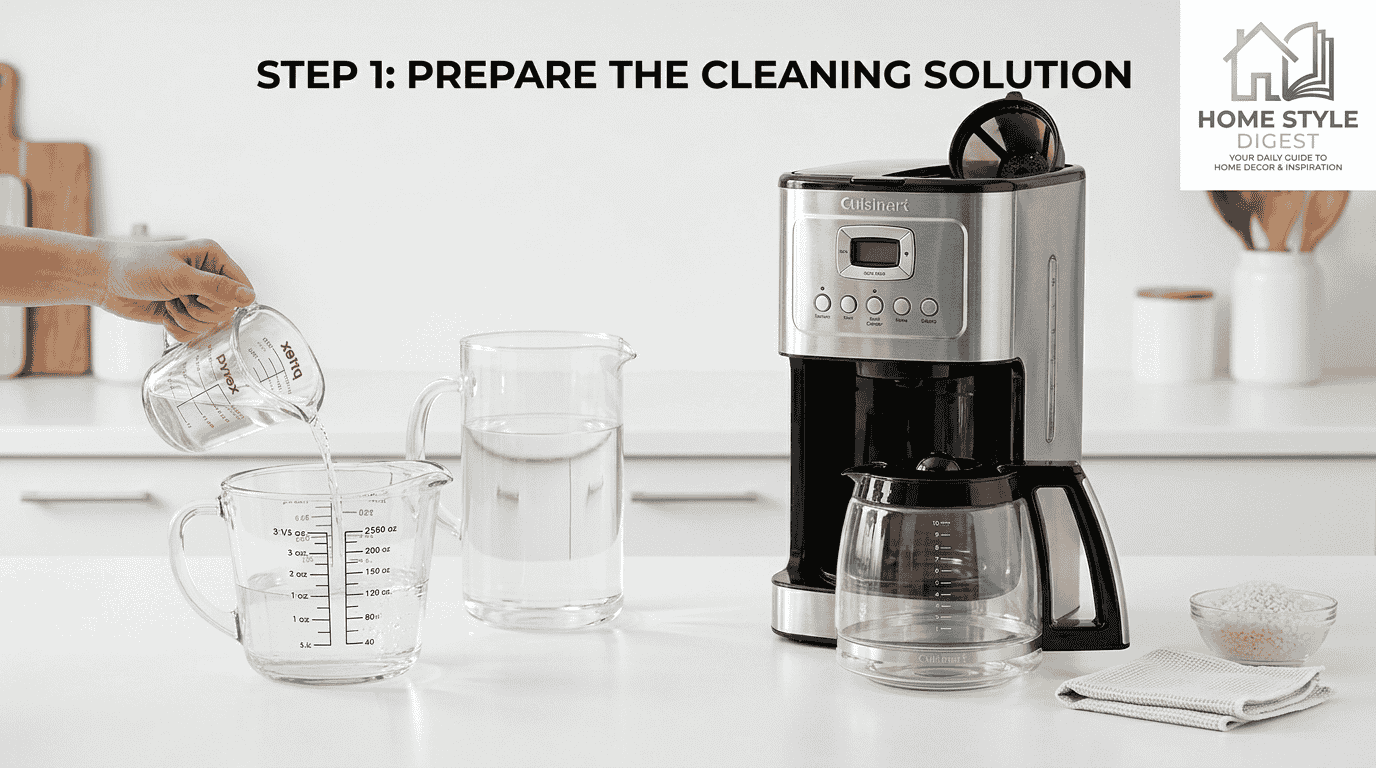
How to clean cuisinart coffee maker is easiest when the machine is treated as several cleaning zones rather than one appliance. A practical routine targets the coffee maker, internal mineral deposits, the water reservoir, and frequently handled components. Keeping frequently used appliances clean also contributes to a more functional and organized kitchen design. This approach helps control residue, odors, and buildup without turning ordinary maintenance into an unnecessarily complicated task.
How To Clean Cuisinart Coffee Maker
A useful deep-cleaning routine does not always begin with vinegar. In practice, the right method depends on whether the machine has a self clean button, a single-serve section, or a removable reservoir. Cuisinart notes that models differ, so checking the model-specific manual before using a cleaning program remains sensible.
How To Clean Cuisinart Coffee Maker K Cup Side
The K-cup section deserves separate attention because coffee oils and leftover liquid can remain around the pod holder even when the main brewer looks spotless. For anyone wondering how to clean cuisinart coffee maker components, the K cup side should be handled independently from the drip-brewing section.
First, disconnect the machine according to the applicable model instructions and remove the accessible removable parts. Wash the filter basket and other washable components with mild soap where appropriate, then use clean water to remove loosened residue. Cuisinart recommends routinely washing removable brewing components rather than allowing deposits to accumulate.
The cleaning process becomes more effective when old coffee grounds are removed immediately. The carafe should also be washed rather than left with stale coffee. A final rinse with fresh water helps remove remaining residue and prevents old flavor from transferring into the next brew.
How To Clean Cuisinart Coffee Maker Water Reservoir
A neglected water reservoir can make an otherwise clean brewer taste stale. For a deeper treatment, vinegar can be combined with water as a descaling method when the particular Cuisinart model permits it. The mixture should be prepared according to the manufacturer’s guidance rather than guessed from another machine.
The important distinction is between ordinary washing and descaling. A cleaning solution can loosen mineral deposits, especially where hard water has encouraged calcium buildup. When filling the machine, the liquid should stay below the stated fill line or maximum fill line rather than exceeding the reservoir’s capacity.
After descaling, the machine needs a complete clean cycle followed by fresh water operation. Multiple rinse cycles can be useful when odor or taste remains. Cuisinart recommends descaling based partly on water hardness, with more frequent cleaning needed in areas where mineral accumulation happens quickly.
How To Clean A Cuisinart Coffee Maker With Self Clean Button
A machine equipped with a self clean button should generally use that feature instead of treating it like a completely different brewer. The clean button activates a programmed cleaning cycle, while the clean light or another indicator can communicate that the process is underway.
For models requiring it, a vinegar and water mixture is placed into the reservoir before activating the program. Cuisinart’s general instructions describe holding the Clean button until the indicator flashes; however, the exact operation should be verified in the machine’s manual because the controls differ between models.
A flashing indicator is therefore more useful than guessing how long the cycle should run. Once the programmed operation finishes, a fresh water rinse should be performed when required by the model instructions. The goal is not simply to make the clean button light disappear, but to leave the internal pathway free from cleaning residue.
How To Clean Cuisinart Coffee Maker Without Vinegar
For households looking to clean without vinegar, baking soda offers another practical option for suitable removable reservoirs. Cuisinart describes baking soda as a vinegar-free cleaning alternative, particularly for removable reservoirs and surface cleaning.
A diluted solution can be prepared with water and baking soda before being placed into the reservoir. The machine can then run a brewing cycle without coffee. Unlike vinegar, baking soda should not be left sitting inside the brewing pathway for an extended period.
The surrounding removable parts can be washed separately using mild dish soap, a soft sponge, or a clean cloth. Afterward, a thorough rinse is important. The overall cleaning result should leave no powdery film, so clean-water cycles are preferable to assuming one pass is enough. Cuisinart recommends two clean-water cycles after its baking-soda method.
How To Clean Cuisinart Coffee Maker With Vinegar
Cleaning with vinegar remains one of the more established approaches for mineral buildup. Cuisinart’s published guidance uses white vinegar with water to create a vinegar solution for descaling, although its exact recommended ratio should be followed for the applicable model.
The mixture goes into the reservoir, after which the machine runs its cleaning cycle. During this process, the acidic solution works against mineral deposits inside areas that ordinary surface washing cannot reach. This is why descaling is different from simply wiping the exterior.
Machines featuring a clean button can use their programmed function where specified. Afterward, several rinse cycles with fresh water help eliminate lingering vinegar flavor and smell. The carafe should also be washed separately, since cleaning the internal brewing path does not automatically remove coffee stains or residue from the vessel. Cuisinart specifically recommends a full clean-water cycle after vinegar cleaning.
