

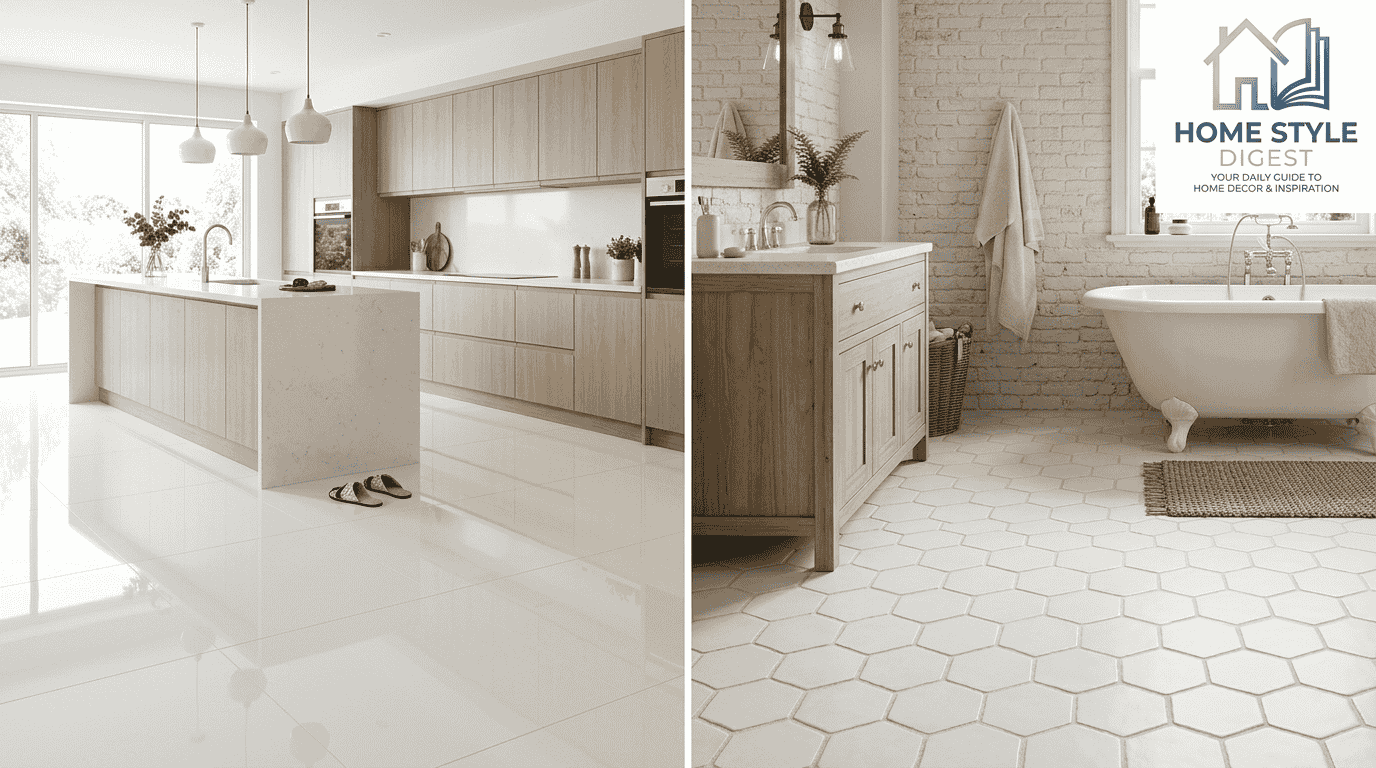
The right white floor tile can make fresh flooring feel intentional rather than ordinary, helping homeowners instantly transform a space without overwhelming the home. When matched with a suitable design style, practical tile floor ideas can improve a bathroom, strengthen its ambiance, and give each room a brighter, more composed character.
- White Floor Tile Design Ideas
- White Floor Tile Patterns and Layout Ideas
- Herringbone White Tile Pattern
- Checkerboard White Tile Pattern
- Pinwheel White Floor Tile Pattern
- Geometric White Tile Patterns
- White Floor Tile Types
- Large Format White Floor Tiles
- White Marble Floor Tile
- White Porcelain Floor Tile
- White Ceramic Floor Tile
- White Floor Tile Ideas for Bathrooms
- All-White Bathroom Tile Design
- White Tile With Contrasting Grout
- White Floor Tile Styles
- Modern White Floor Tile
- Vintage White Floor Tile
- Minimalist White Floor Tile
White Floor Tile Design Ideas
A well-chosen white floor tile creates a clean appearance and bright appearance across different rooms, often giving them a larger feel. This explains why it works especially well in minimalist interiors, modern interiors, traditional interiors, and contemporary interiors. Rather than treating white flooring as a blank surface, experienced designers use it as a controlled foundation for natural wood elements, gold finishes, metallic finishes, dark contrasting furniture, neutral walls, and bold accent colors.
The strongest schemes usually depend on restraint. White flooring can support dramatic furniture or colorful accessories without competing with them, making it useful for both renovation projects and carefully planned new builds. From a practical flooring perspective, the final choice should respond to traffic, moisture, maintenance, and the broader demands of interior design.
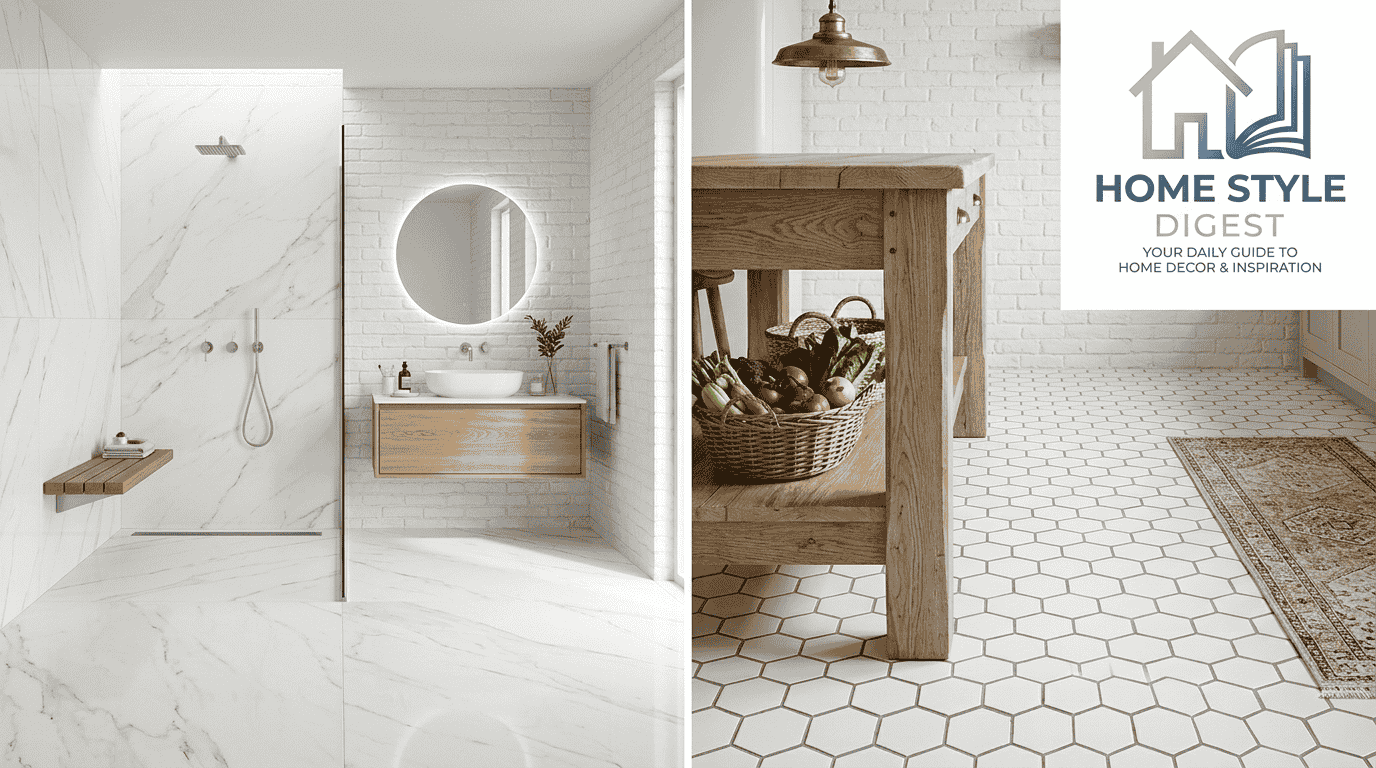
A useful design decision often comes from observing how the room is furnished first. If furniture already carries strong visual weight, a quieter floor helps maintain balance. If the furnishings are restrained, texture or pattern can give the floor enough personality to prevent the interior from appearing flat.
Design Direction
The same surface can feel warm, formal, contemporary, or relaxed depending on surrounding materials. Designers often test tile samples beside cabinetry, wall paint, lighting, and furniture before installation because white can shift noticeably under different natural and artificial light.
White Floor Tile Patterns and Layout Ideas
A white floor tile pattern does more than decorate a surface. Carefully selected tile patterns and layouts can create visual interest while preserving the brightness expected from white flooring. A restrained arrangement offers a decorative appearance without making the floor visually dominant, especially when the material already provides subtle texture.
For a sophisticated result, a neutral palette can be paired with contrasting installation directions or repeated geometry. Traditional flooring designs tend to emphasize balance and symmetry, while newer approaches introduce irregular spacing or larger modules. The result can retain a classic appearance while accommodating modern designs.
A practical observation from renovation work is that pattern should respond to the architecture rather than being selected in isolation. Narrow rooms, open-plan areas, and compact bathrooms each reveal grout lines and directional movement differently, so the layout can be just as important as the tile itself.
Herringbone White Tile Pattern
The herringbone white tile pattern gives simple white tiles more character through the direction of installation. A traditional herringbone pattern works particularly well across bathroom floors, where the arrangement introduces a decorative appearance without requiring heavily ornamented materials.
Because plain white tiles remain visually quiet, the directional structure provides visual interest while preserving a sense of space. This approach is especially useful when a homeowner wants a patterned floor but does not want the room to feel busy.
Designers often recommend checking the scale before installation. Small-format pieces can make a compact room energetic, while longer pieces create a more elongated rhythm. The pattern can also connect visually with wall tile, cabinetry, or lighting, allowing the floor to feel integrated rather than separately decorated.
Checkerboard White Tile Pattern
The checkerboard white tile pattern remains relevant because black and white flooring offers a timeless appearance without depending on short-lived trends. It can support vintage design, reinforce classic design, or become surprisingly current when paired with simplified furniture and restrained finishes.
The strongest installations rely on contrast rather than excessive decoration. A crisp clean aesthetic keeps the pattern readable, while alternative layouts can change its visual energy. Rotating the grid, adjusting tile proportions, or extending the pattern into adjoining areas can produce a distinctive flooring pattern.
A designer may also soften the traditional character through contemporary cabinetry or understated fixtures. That combination prevents the checkerboard floor from becoming overly nostalgic and demonstrates why this pattern continues to adapt across different generations of interiors.
Pinwheel White Floor Tile Pattern
The pinwheel white floor tile pattern gives a room an established modern style and vintage style at the same time. Combining white tile with black tile creates a recognizable mosaic floor, particularly when a white 1×2 tile surrounds a black 1×1 tile.
The resulting pinwheel pattern works as a classic backdrop for furnishings with period character, although it does not require an entirely vintage room. In practice, midcentury furniture can make the same floor appear sharper and more architectural.
Scale matters considerably here. A pattern that looks elegant in a spacious entry can become visually dominant in a narrow room. Designers generally test a physical layout before committing because the relationship between tile size, grout width, and furniture determines whether the pattern feels refined or crowded.
Geometric White Tile Patterns
Geometric white tile patterns can add personality without abandoning the brightness associated with white surfaces. Simple geometric patterns establish visual interest, while a restrained neutral palette prevents the floor from competing with cabinetry or wall finishes.
In larger rooms, large geometric patterns can provide strong visual structure with relatively few decorative materials. They are particularly useful when a project needs unique flooring designs but does not suit intricate mosaics. The final tile arrangement should follow the room’s proportions, sightlines, and furniture placement.
An experienced installer also considers where the pattern begins and ends. Alignment at doorways, islands, vanities, and transitions can determine whether the geometry appears intentional. Small adjustments at these junctions often make a greater difference than choosing a more complicated pattern.
White Floor Tile Types
Understanding white floor tile types begins with comparing flooring materials, available tile options, and the requirements of different interior spaces. A kitchen, entryway, bathroom, and living area may all use white flooring, but their exposure to moisture, impact, stains, and traffic differs.
Material selection should therefore consider durability alongside appearance and versatility. Porcelain, ceramic, natural stone, and marble-look products can produce similar visual effects while behaving differently over time. Careful tile selection reduces the likelihood of choosing a surface that looks excellent in a sample but performs poorly under everyday conditions.
The most convincing rooms usually treat the material as part of the architecture. Instead of selecting a tile only because it photographs well, designers evaluate its surface texture, maintenance requirements, edge quality, grout compatibility, and response to changing light.
Large Format White Floor Tiles
Large format white floor tiles are often selected when large floor tiles can simplify the visual field. With fewer grout lines, the surface develops an airy feel, which can be particularly effective in smaller spaces where excessive joints might interrupt visual continuity.
This approach creates an illusion of a larger space, although the physical dimensions remain unchanged. Porcelain tiles are frequently considered because they can provide a seamless appearance, a modern appearance, and a contemporary style with relatively low visual interruption.
The clean visual appearance can also make furniture placement feel more deliberate. However, installers must consider substrate flatness, tile handling, room geometry, and expansion requirements. Large pieces are not automatically superior; they work best when the room can accommodate their dimensions without awkward cuts.
White Marble Floor Tile
White marble floor tile brings marble tiles into spaces that benefit from a luxurious appearance. It can elevate bathroom spaces and living spaces, while modern marble-look tiles offer a practical alternative for homeowners seeking classic elegance without necessarily choosing natural stone.
The attraction goes beyond color. Veining contributes a natural stone appearance, while polished or honed surfaces can establish a high-end design feel. Designers often use marble as a visual anchor, allowing surrounding materials to remain comparatively quiet.
Natural marble does require thoughtful maintenance because porosity, staining, etching, and sealing can affect long-term performance. A marble-look porcelain surface may therefore be preferable where durability and simplified care matter more than authentic stone variation.
White Porcelain Floor Tile
White porcelain floor tile is valued because porcelain tiles combine durability with versatility. They can serve bathrooms, kitchens, entryways, and living spaces, making them one of the most adaptable choices for continuous residential flooring.
The material can imitate stone, concrete, marble, or simpler white finishes while offering a broad range of textures and formats. This makes it a dependable flooring solution when a project needs visual consistency across several rooms.
A useful professional approach is to inspect the actual sample rather than relying only on digital images. Surface reflectivity, undertones, edge details, and grout interaction are much easier to evaluate physically, especially when the goal is a bright but comfortable interior.
White Ceramic Floor Tile
White ceramic floor tile remains a reliable traditional tile option because ceramic products are available in numerous shapes, sizes, and finishes. Their flexibility makes them suitable for many residential flooring applications, particularly when the design calls for accessible styling rather than specialized stone.
Square and rectangular formats can establish straightforward grids, while smaller pieces can support mosaics and decorative arrangements. Matte finishes generally feel softer and more forgiving, whereas glossy surfaces reflect more light and can strengthen the perception of brightness.
For floor use, product specifications matter. Not every ceramic tile is intended for every traffic level or moisture condition, so the selected product should always match the room and installation requirements.
White Floor Tile Ideas for Bathrooms
Practical white floor tile ideas can reshape bathroom design by treating bathroom flooring as an active part of the room rather than an afterthought. White provides a clean appearance, while the correct material and pattern can add a modern appearance without sacrificing usability.
The best bathrooms often balance white surfaces with variations in scale and tile finishes. Matte floors can reduce visual glare, textured products can introduce subtle depth, and larger formats can minimize grout interruptions.
In small bathrooms, proportion becomes especially important. A quieter floor can help the walls, shower, vanity, and lighting work together. Designers often test grout and tile combinations under the bathroom’s actual lighting before installation because the same white can appear warmer or cooler throughout the day.
All-White Bathroom Tile Design
An all-white bathroom tile design does not have to look sterile. Using white tiles with different finishes can establish depth within a restrained bathroom, particularly when walls and floors vary subtly in texture or sheen.
White walls can be paired with wood accents to introduce warmth, while gold-toned metal fixtures add a refined detail. The resulting modern appearance retains a clean appearance without relying on numerous colors.
From a design perspective, texture is often more effective than adding extra decoration. A matte floor beside lightly textured walls and controlled metallic details can make an all-white room feel layered. This is one reason designers increasingly evaluate surface relationships rather than simply counting colors.
White Tile With Contrasting Grout
White tile with contrasting grout changes the character of the floor through grout color rather than through the tile itself. White floor tiles with matching grout create a seamless appearance and monochromatic appearance, while gray grout introduces soft contrast suited to a neutral style.
For stronger definition, black grout creates a bold graphic look and makes individual pieces easier to read. The choice also affects maintenance and cleaning, since grout color can disguise or emphasize everyday marks differently.
A common misconception is that contrasting grout automatically makes a room look busy. In reality, the outcome depends on tile size, installation pattern, room scale, and surrounding finishes. A carefully controlled contrast can actually clarify the architecture and make an otherwise simple floor more distinctive.
White Floor Tile Styles
Different white floor tile styles can support radically different rooms. A modern style may favor broad surfaces and restrained joints, while a vintage style can use repeating geometry. A minimalist style usually relies on simplicity, proportion, and limited visual interruption.
The range of tile designs means white flooring can work with numerous interior styles without becoming visually disconnected. What changes is the relationship between format, pattern, finish, grout, furniture, and lighting.
The overall flooring appearance should therefore be judged as a complete composition. A tile that looks plain in isolation may become sophisticated once paired with the correct cabinetry, wall color, hardware, and natural light.
Modern White Floor Tile
Modern white floor tile works especially well where a polished look is balanced with minimal furniture, clean lines, and neutral colors. These conditions allow the floor to support the architecture rather than compete with it.
In modern interiors, large surfaces can create continuity, while contemporary spaces may benefit from subtle variations in texture or grout. The objective is not necessarily maximum brightness; it is controlled brightness that leaves enough visual space for furniture and architectural details.
Designers often find that an understated floor ages better than an aggressively trendy pattern. When cabinetry, lighting, and furnishings eventually change, a restrained white base can continue supporting the updated room without demanding another flooring renovation.
Vintage White Floor Tile
Vintage white floor tile gains much of its appeal from classic patterns and vintage-inspired designs. Checkerboard, mosaic, and pinwheel patterns can reproduce historical visual language while remaining useful in contemporary homes.
Its strength comes from the ability to create a traditional appearance without requiring every element in the room to look old-fashioned. Modern plumbing fixtures, simplified cabinetry, or contemporary lighting can deliberately contrast with the floor.
The most successful vintage-inspired installations usually avoid excessive imitation. One strong historical reference is often enough. The floor can establish the period character while the surrounding materials keep the room comfortable, functional, and current.
Minimalist White Floor Tile
Minimalist white floor tile is most effective when simple white flooring supports a calm environment and an uncluttered environment. The emphasis is on proportion, continuity, and material quality rather than decorative complexity.
Large-format tiles can reduce visual interruptions, while matching grout reinforces a streamlined appearance. This combination works particularly well in open interiors where the floor needs to connect multiple functional areas without creating competing zones.
A practical minimalist approach does not mean removing every detail. Instead, it means choosing fewer elements and making each one deliberate. A carefully selected texture, natural material, or understated fixture can provide enough variation to keep white flooring sophisticated rather than visually empty.
