

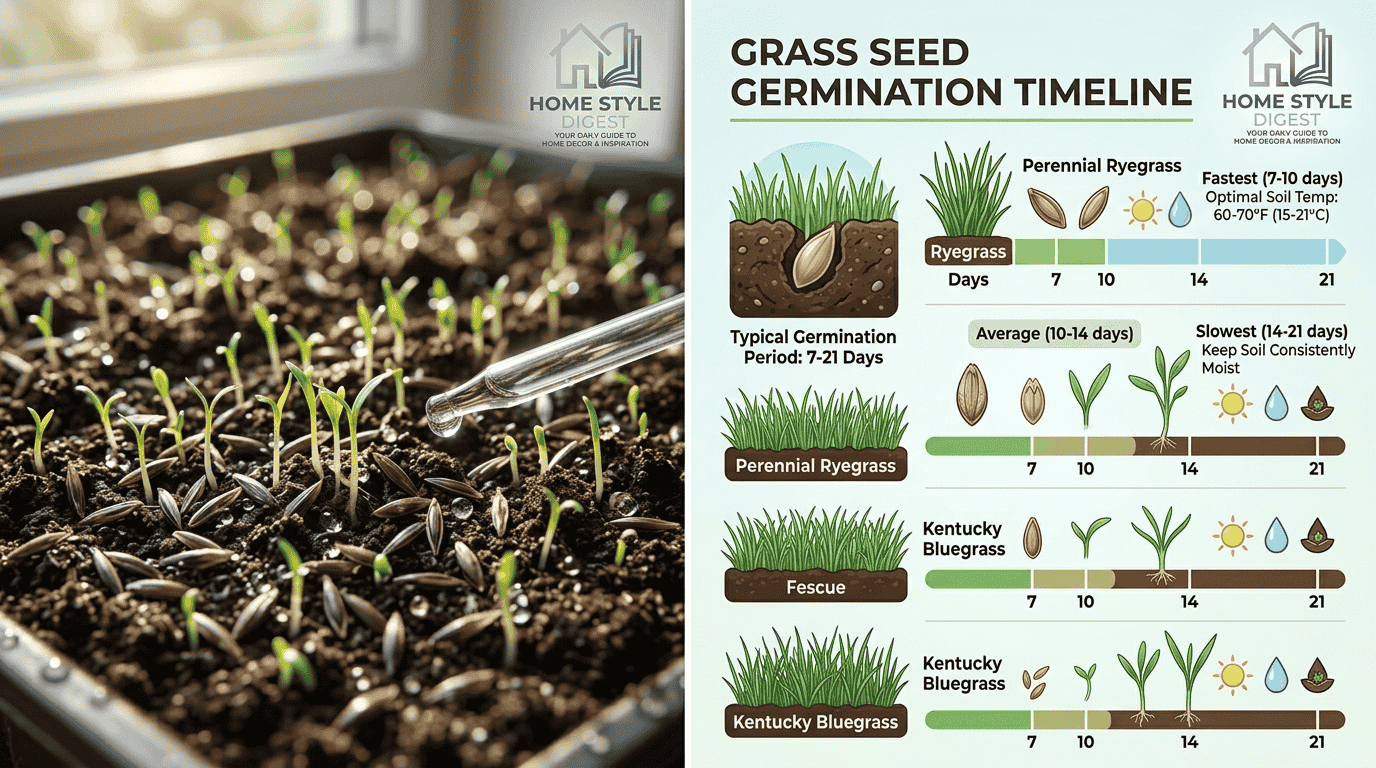
How long for grass seed to germinate depends on the grass type, seed variety, temperature, moisture, and overall growing conditions. Most grass seed begins to germinate and sprout within several days, while some varieties need a few weeks. With proper watering, suitable soil conditions, and proper care, seedlings can establish into a healthy lawn.
- How Long Does Grass Seed Take To Germinate?
- Grass Seed Germination Timeline
- Grass Types and Their Germination Times
- Factors That Affect Grass Seed Germination
- Grass Type
- Soil Temperature
- Moisture and Watering
- Soil Quality and Preparation
- Weather Conditions
- How To Speed Up Grass Seed Germination
- Prepare The Soil Properly
- Keep Seeds Moist
- Choose The Right Planting Season
- How To Know If Grass Seed Is Germinating
- How Long Until Grass Is Ready To Mow?
- Common Reasons Grass Seed Does Not Germinate
- Watering Schedule For New Grass Seed
- How Often Should You Water Grass Seed?
- Grass Seed Germination vs Grass Growth
- Seed vs Sod Growth Timeline
- Best Conditions For Successful Germination
- Will Grass Seed Germinate On Top Of Soil
- How Long Does It Take For Grass Seed To Grow In The Fall
- How Long Does Grass Seed Take To Grow When Overseeding
- How Long For Grass Seed To Germinate In Summer
How Long Does Grass Seed Take To Germinate?
The germination cycle varies between common grass types because every grass type has a different growth rate. Cool-season grass generally responds to moderate temperatures, while warm-season grass prefers warmer soil and weather. A lawn planted under favorable conditions can move from seed to sprout noticeably faster.
A useful expectation is that new grass seed may begin sprouting within one to several weeks, although the exact turf timeline depends on moisture, temperature, and preparation. A lush lawn takes longer than the first visible sprouts; the full ready-to-mow lawn stage requires continued proper care and lawn establishment.
Grass Seed Germination Timeline
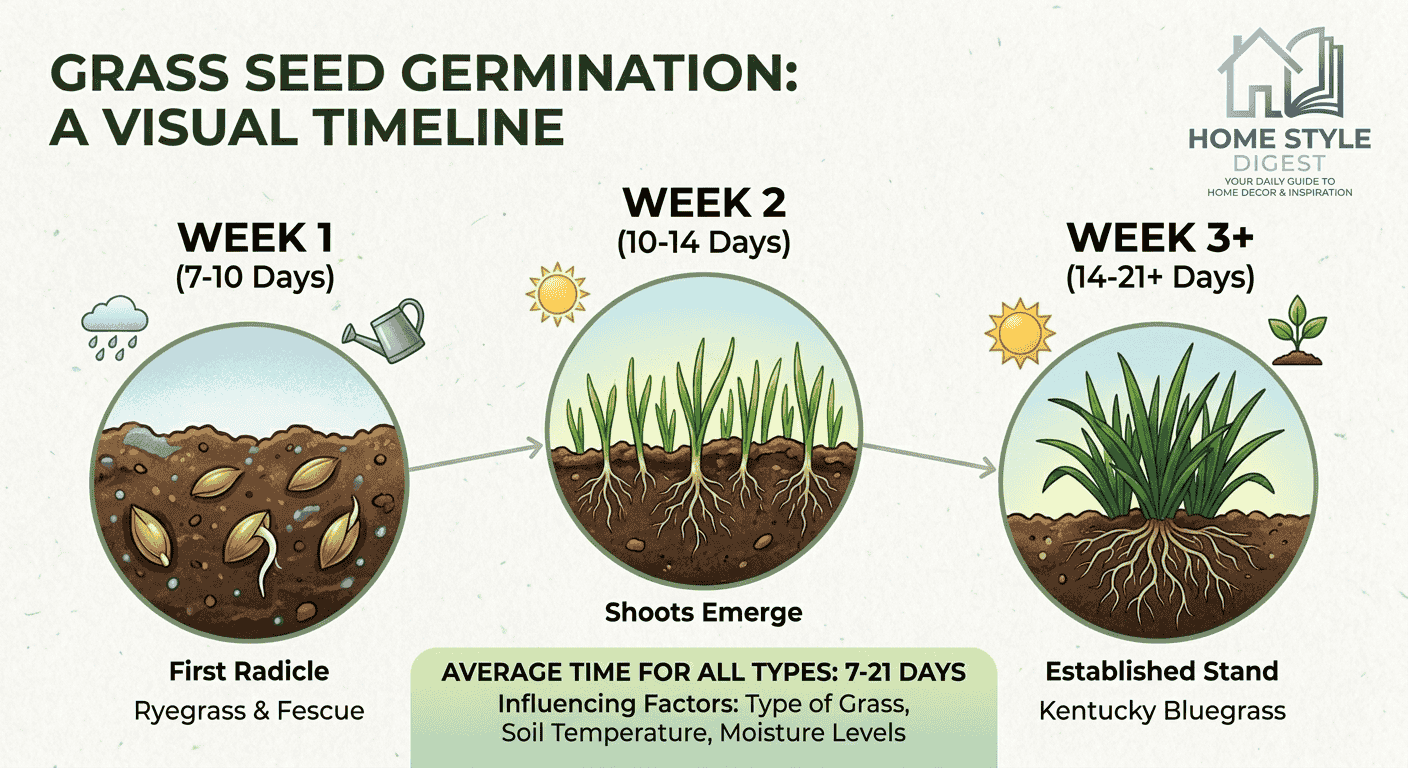
The grass seed germination timeline can be viewed as a range rather than one fixed date. Cool-season grass seed may take five to thirty days, while warm-season varieties can appear in approximately four to twenty-one days depending on conditions.
Some cool-season grasses may show results around seven to twenty-eight days, while particularly responsive seed can begin within seven to ten days. In practical lawn work, two to three weeks is a useful observation period before judging the entire germination cycle.
Grass Types and Their Germination Times
Different grass types have different germination times. Tall fescue can commonly appear within five to ten days, while perennial ryegrass and annual ryegrass may establish relatively quickly under favorable conditions. Rough bluegrass generally falls into a longer range.
Kentucky bluegrass can require approximately seven to twenty-one days, while fine fescue often needs seven to twelve days. Buffalograss, Bermuda grass, and centipede grass have their own temperature preferences. A practical seed germination guide therefore considers grass varieties, days, and weeks together rather than relying on one universal number.
Factors That Affect Grass Seed Germination
Several factors influence grass seed germination, particularly grass species, soil temperature, moisture, and soil quality. The expected germination speed also reflects natural growth patterns, weather conditions, and the selected grass variety.
Good seed-to-soil contact gives the seed access to moisture and oxygen availability, while an unsuitable soil pH can interfere with establishment. Cool-season grasses and warm-season grasses react differently to air temperatures. Cold temperatures, extreme heat, heavy rainfall, and overly wet soil conditions can all change moisture absorption and delay emergence.
Grass Type
The selected grass type determines much of the expected germination speed because every grass species follows different natural growth patterns. Some seed varieties begin sprouting rapidly, while others require several weeks. The grass seed therefore needs enough time for reliable lawn establishment rather than being judged too early.
Soil Temperature
Soil temperature is one of the most useful indicators of successful germination. Cool-season grass generally performs better as soil temperatures move around fifty degrees Fahrenheit, while warm-season grass responds better around sixty-five degrees Fahrenheit and above, with approximately sixty to seventy degrees Fahrenheit often supporting suitable growth.
Because air temperatures can differ from soil conditions, checking the actual planting environment gives a better indication of successful germination and overall growing conditions.
Moisture and Watering
Consistent moisture is essential during germination. After planting, grass seeds need moist soil, but waterlogged soil can reduce oxygen availability. If the surface keeps drying out, it can stop germination, while excessive water can disturb seeds.
During the first seven to ten days, light watering and frequent watering can maintain surface moisture in the top soil layer. Deep watering becomes more useful later as seed establishment and root development progress.
Soil Quality and Preparation
Good soil quality begins with sensible soil preparation and healthy soil conditions. Before sowing, the soil should support germination with an appropriate soil pH. A pH level around six point zero to seven point two can provide a suitable range for many lawn situations.
Strong seed-to-soil contact also improves moisture absorption. Cool-season grasses and warm-season grasses may differ in preference, so proper preparation should match the selected seed.
Weather Conditions
Changing weather conditions can accelerate or delay germination. Cold temperatures may produce slow germination, while extreme heat can increase watering requirements. Heavy rainfall may leave seeds sitting in saturated soil conditions.
When wet soil becomes excessive, seed can experience seed disturbance or poor contact. For that reason, the surrounding growing environment matters just as much as the seed itself.
How To Speed Up Grass Seed Germination
To speed up grass seed germination, gardeners should prepare soil, select the appropriate planting season, and keep seeds moist without saturating the surface. Good seed preparation, consistent watering, and reliable soil contact help the germination process proceed efficiently.
A balanced approach supports grass growth, faster growth, and stronger healthy seedlings. The goal is not to force emergence but to create conditions that allow a successful lawn to develop naturally.
Prepare The Soil Properly
Before planting, prepare soil by completing basic soil preparation. Remove debris and weeds, then create reliable seed-to-soil contact. After distributing the grass seed, lightly rake the soil surface so the seed is positioned correctly.
The seed can then be gently pressed down. This improves moisture absorption without burying it excessively and makes the planting process more consistent.
Keep Seeds Moist
To keep seeds moist, begin watering immediately after planting and monitor soil moisture closely. During the first two weeks, light watering can be preferable to heavy watering when heavy application causes pooling.
Consistent surface moisture supports emerging seeds and developing seedlings. The objective is to prevent drying while avoiding conditions that keep the seedbed saturated.
Choose The Right Planting Season
The correct planting season depends on whether the lawn uses cool-season grass or warm-season grass. Fall planting can suit cool-season seed because declining nighttime temperatures may align with its preferred conditions.
A reading near fifty degrees Fahrenheit can signal a useful transition for cool-season planting, although the growing season, suitable climate, and expected germination conditions should all be considered.
How To Know If Grass Seed Is Germinating
Early signs of grass seed germinating include tiny sprouts breaking through the soil surface. At first, small sprouts may look insignificant, but developing green blades indicate that the grass seedlings are progressing.
As leaves expand, photosynthesis supports further seedling growth. A lawn may need four to six weeks before the new grass reaches approximately three to four inches tall, depending on conditions.
How Long Until Grass Is Ready To Mow?
New grass ready to mow should not be judged only by calendar days. Before mowing, the grass height should generally approach three to four inches, while grass seedlings need enough strength to tolerate the mower.
Although germination may happen within four to six weeks, actual established growth varies. Delaying mowing until the grass is sufficiently developed supports lawn maintenance and healthy grass.
Common Reasons Grass Seed Does Not Germinate
When grass seed does not germinate, the first suspects are lack of moisture, excess water, incorrect soil temperature, and poor soil contact. Choosing the wrong grass type for the local climate can create similar problems.
Poor planting conditions, old or unsuitable seed, and other forms of seed failure can contribute to germination problems. Checking each factor separately is more useful than immediately reseeding.
Watering Schedule For New Grass Seed
A practical watering schedule for new grass seed starts during the first week with light watering several times daily when needed to maintain moisture. Once seedlings establish, regular watering can gradually replace frequent surface applications.
The topsoil should not dry out during the germination stage. As roots develop, watering can support root development, stronger establishment, and better moisture management.
How Often Should You Water Grass Seed?
How often to water grass seed depends on watering frequency, weather, and the germination stage. During the first seven to ten days, maintaining soil moisture near the surface is particularly important.
Once seedlings develop deeper roots, the establishment stage allows a shift toward regular watering. Good topsoil preparation and moisture retention reduce the risk of rapid drying between applications.
Grass Seed Germination vs Grass Growth
Grass seed germination is only the first stage of grass growth. Sprouting shows that the seed has begun developing, but the emerging roots and leaves still need time to become strong grass.
The lawn then moves toward establishment, where mowing, limited foot traffic, seed development, and continued lawn growth matter. The establishment period is therefore longer than the initial germination window.
Seed vs Sod Growth Timeline
The seed vs sod decision produces different visual expectations. Grass seed must pass through germination before visible lawn development becomes substantial, whereas sod provides immediate surface coverage.
Seed may show visible results within approximately seven to twenty-one days, but full establishment takes longer and depends on the growing season. Sod also requires care while roots connect with the underlying soil, so both approaches have a distinct growth timeline and lawn development process.
Best Conditions For Successful Germination
The best conditions for successful germination combine the correct grass variety, correct grass type, suitable temperature, and consistent moisture. Good soil preparation and the right planting season create additional proper conditions for seed growth.
Rather than focusing on one variable, successful lawn establishment comes from keeping these conditions balanced throughout the early growth period.
Will Grass Seed Germinate On Top Of Soil
Grass seed can germinate near the top of soil, but proper seed-to-soil contact improves reliability. Seed sitting loosely on the soil surface may receive moisture, yet wind, rain, or drying can interfere with placement.
Light raking provides proper placement while preserving access to moisture. Basic soil preparation helps seeds remain stable and increases the likelihood of successful germination under suitable growing conditions.
How Long Does It Take For Grass Seed To Grow In The Fall
Grass seed planted in the fall can grow successfully when the selected cool-season grass is matched with the local planting season. During autumn, cooler weather can support germination while reducing some summer moisture stress.
The expected period may be around seven to twenty-one days for germination, although soil temperature, moisture, and broader growing conditions affect seed establishment and later lawn growth.
How Long Does Grass Seed Take To Grow When Overseeding
When overseeding, grass seed is introduced into an existing lawn, so germination depends heavily on seed-to-soil contact. Thatch, dense turf, or poor surface access can limit moisture and reduce the effectiveness of watering.
Once new seedlings appear, they still need time for grass growth, lawn repair, and establishment. Cool-season grasses may follow a different growth timeline than warm-season varieties, making the existing lawn and season important considerations.
How Long For Grass Seed To Germinate In Summer
Summer can produce quick grass seed germination for warm-season grass when soil temperature, heat, and moisture are balanced. Bermuda grass and centipede grass are examples of warm-season choices that can respond well to warm weather.
However, extreme temperatures increase watering requirements, and inconsistent moisture can interrupt seed sprouting. Therefore, summer growing conditions should be monitored closely rather than assuming warmer weather always means faster germination.
